
 Daryl Surat
January 5, 2010
Daryl Surat
January 5, 2010 As a somewhat lapsed PC gamer, I personally have never been fond of the gameplay in Halo and especially not the multiplayer culture it popularized both online and off, which is why I’m so let down every time a new FPS gets made which decides they need to copy Halo‘s mechanics. How come they never copy the GOOD aspects of Halo, namely the presence of a single-player cooperative mode? But regardless of one’s opinions regarding the games themselves, it cannot be denied that Halo ushered in a new generation of gamers… most of whom were nightmarish creatures that only care about that one game (sometimes known as the “Madden Effect”)…but SOME of whom ended up cool and discovered other things. Why, in that sense you could call it a “gateway” title, a videogame equivalent of the “gateway anime” titles I discussed in a previous web article!
Halo: Legends is in a position to have the same effect, only for anime. Love it or hate it, it’s exactly the type of thing that the anime industry needs to make more of: a title that is both accessible to non-diehard anime fans while also providing a vehicle to demonstrate to people the kinds of stories anime is capable of showing and telling. The combination of a highly popular American entertainment franchise with top Japanese animation talent practically guarantees it’ll be one of if not the top selling anime title of 2010. Batman: Gotham Knight and The Animatrix followed similar approaches, and both of those are among the top selling anime DVDs in America of all time. The Animatrix, Batman: Gotham Knight, and now Halo: Legends all have a few things in common. Certainly, they’re all US-Japanese co-productions revolving around properties that are already established and popular in America, thus assuring that a huge amount of people will watch these works that would otherwise never watch anime. But there’s another important factor to consider behind why they’re so good to show to those new to anime: all are anthologies.
An anime anthology is a collection of relatively short works, generally by different studios/creators with one person or so overseeing the overall project. Each short tends to be self-contained from the others, though a general theme is often established in the case of shorts made specifically for anthologies in the first place. The theme is usually somewhat vague: “make something about robots” or “do something with Batman.” The end goal is for each short piece to present a radically different take on the same basic concept, thus demonstrating the breadth and versatility of not just the theme, but the talent assembled.
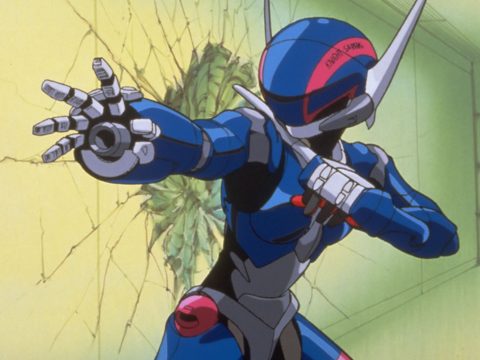
Robot Carnival was the first anime anthology I ever saw, and indeed one of the first anime I ever saw period, so in my mind it remains one of the best. Whether you agree with this assessment depends on how much you enjoy or remember the 1980s. Unfortunately, you can’t actually buy it in the US, so I won’t tease you by going on at length about how great it is. If you really want to hear me talk about that, I reviewed it on this podcast. For my money’s worth, it’s hard to think of a BAD anime anthology, but that’s not to say you’ll like everything you see. In fact, chances are almost certain that you will not like every single short a given anime anthology has to offer. Fortunately, if you don’t like a specific short, something totally different will come on in a few minutes since each segment is its own unique thing. With so much variety, there’s often no dominating consensus regarding what the “best” and “worst” short was for any given anthology. The closest I’ve seen to agreement is people preferring the “Magnetic Rose” segment of Memories. That might just be because I agree, though.
As I noted in the magazine, Studio 4°C are the undisputed kings of the anthology compilation. As one of the few studios willing to take real risks, they produce lots and lots of short animated works which are then collected into anthology pieces. At least eight anthologies were produced in the 2000s alone, and Studio 4°C either created or contributed work towards every single one. In addition to the three US/Japan co-productions, at least five were done solely by them: Genius Party, Genius Party Beyond, Digital Juice, Sweat Punch, and their music video collection Amazing Nuts! All are worth seeing. Unfortunately, as is the case with Robot Carnival and the majority of the anime Studio 4°C produces, not a single one of those is available for purchase in North America since it turns out that weird, experimental fare just isn’t commercially viable! Fan-subtitled efforts are the only way you’ll ever be seeing any of those for the foreseeable future. In fact, aside from the US/Japan collaborations most of the anime anthology titles made can’t be bought on DVD in the US. If you’re willing to go online—you’re reading this, aren’t you?—two are still easy to get at affordable prices: Neo Tokyo released by the now-defunct ADV Films and Memories released by Sony are both comprised of three shorts each. Although they were all created by the same person, Osamu Tezuka’s Phoenix released by Anime Works/Media Blasters is also an anthology work since it consists of multiple standalone stories revolving around a common theme. But none of them is particularly popular among anime fans in America.
A regrettable situation, as a great strength of the anthology is that the creators can afford to really push the envelope as far as things that haven’t been done before goes. Animation techniques, story ideas, and most importantly who to put in charge of the creation are easier to make risky gambles on when making brief animations than when doing a full-scale TV show or movie. The bigger the budget, the fewer risks you’re willing to take that could jeopardize making money. So it is that anthology segments are often helmed by people who either don’t typically direct anime or haven’t gotten the chance to do so previously. The continued creation of these works helps foster new up-and-coming talent, which considering the age of most anime directors ought to be a high priority! Especially when you factor in the brain drain they’re experiencing due to a one-two punch from the videogame industry and awful work/pay conditions.
An often asked question is “what anime should I show to a friend or relative who’s new to anime?” Despite the fact that they are hardly ever actually used, due to the qualities listed above I say that anthologies are hands down the single best answer out of everything out there that you could possibly show. Think about it. The first lesson that every anime fan must know—not just learn as a rote statement to recite when asked “why do you like anime, anyway?” but truly KNOW—is that anime is not a single genre bound by a single set of conventions. Anime is [must resist urge to say “STRAIGHT FROM JAPAN! TOTALLY UNEXPECTED! NOT KID’S STUFF!”] a storytelling medium capable of encapsulating several genres as well as narrative/visual styles. Thanks to the success of Shonen Jump, the average person has an idea in their mind of what “anime style” is: speed lines, big eyes, sweat drops, with maybe some sex and violence. You want to demonstrate that this preconception is not always true and that there is no one style.
Anthologies excel at this because they expose the viewer to a variety of different art styles and stories in the fastest possible time. That’s important because the typical new fan is only willing to devote so much time to this whole “anime” thing, which is why movies and short OAVs are also ideal. TV shows might actually be the least beneficial thing to show to new or would-be new anime fans. Misjudge a person’s tastes, and they will either apply their dislike of the thing you showed them to all anime overall, or like it and thus be in danger of being one of those fans that only likes one show or shows similar to it…which to be fair, is how most anime fans are! I say neither outcome is desirable, but then again the supermajority of American anime fans ever since the 1960s got into it because they saw a TV show. Including me! But aside from Ani-Mondays on the SyFy channel, anime isn’t exactly on TV anymore, is it? If we want to draw in new fans, maybe it’s time for fresh tactics!
![Robot Carnival [Review]](https://otakuusamagazine.com/wp-content/uploads/2018/11/robocarnie3-480x360.jpg "Robot Carnival [Review]")