
 Ed Chavez
January 21, 2009
Ed Chavez
January 21, 2009  The following statement may or may not be fully supported by this magazine’s editorial staff, but given my years of manga experience I wholeheartedly believe it to be true– “Manga are comics; comics are manga.”
The differences between the two are so insignificant that in certain cases, if presented under the right circumstances, you possibly could not tell them apart visually. The differences between manga and other forms of sequential art does not come from the character design nor how it is generally read right to left (as Chinese comics are also presented in that orientation), it is found in the way stories are told. There is a different perspective in how manga are told and much of it revolves around how a manga is laid out, but single character focused writing also is unique to the comics found in parts of Asia, particularly Japan.
Back in August I got a chance to pass by the Shogakukan offices to speak with a man who has helped change what manga looks like over the last few decades. Egami Hideki has been working some of the best comic makers for Shogakukan. He made his debut as an editor for a music magazine. His love for The Beatles led him to a field that was right in his wheelhouse, but it did not take long before he found himself deep in the world of manga where he made his mark with Big Comics Spirits.
Starting back when Spirits was still a bi-weekly magazine, he had a chance to work with experienced legends like Koike Kazuo, as well as future stars Yamamoto Naoki and Kubo Kiriko. At the time, Spirits, which premiered in 1980, was a magazine that focused on romances and adolescent dramas. Egami helped the magazine go in an exciting direction as he began to work with some of his favorite artists developing comics within the genres that he felt passionate about and introduced an “alternative” sensibility to the major magazine. Although the magazine already had Karuizawa Syndrome that appealed to hardcore comic readers when it was launched, Egame would follow that up by introducing gag titles from Yoshida Sensha, Aihara Kouji (Even a Monkey Can Draw Manga), and Egawa Tatsuya (Tokyo University Story) throughout the 90’s. Yet, he never forgot what made the magazine great, as he really devoted himself to working with some of the masters to develop a number of hard-boiled dramas. Noujou Junichi’s Gekka no Kishi proved the world of shogi (Japanese chess) could be as powerful and compelling as any comic written by Urasawa. And speaking of Urasawa Naoki, Egami was the first person who got to overhear the original concept for the award winning 20th Century Boys. During his time at Spirits the magazine exploded and a wider audience led Shogakukan to switch the schedule to a weekly format.
 Spirits‘ titles are generally clean looking, well written stories featuring strong characters dealing with realistic personal issues. These are not the polished action manga of Shonen Jump, RIVAL or SQ. The wispy overdone panels found in shojo manga and Ohzora romances are missing here also in favor of strong, well-defined panels designed for easier comprehension. While the magazine has had a surreal tinge with their fantasy, sci-fi and comedy properties, the dramas and romances Spirits produced over the years have had a strong sense of realism. That element helped inspire many live action films and series since the early 90’s. But according to Egami, “the demands of a weekly magazine limited the creative process of his artists.”
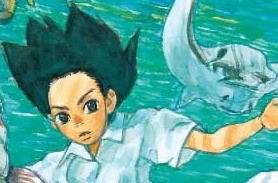
According to Egami, it was Matsumoto Taiyo that persuaded him to develop a new magazine. Three years outside of the traditional magazine world lead to Matsumoto’s opus GoGo Monster. The huge 440 page one-shot, produced without the support of assistants, could not have been made with the deadlines that a magazine like Spirits requires its artists to work within. Looking at the amazing quality and freedom of expression Matsumoto unleashed, Egami took the reigns of a spin-off to Spirits called Ikki back in 2000. The special edition magazine would plug along every other month, featuring familiar talents from the Spirits catalog but now with a more experimental attitude nurturing the notion that time and freedom equals quality.
The project worked. The timing was just right as the industry saw a few changes from the already small world of “experimental” manga. Legendary underground magazine Garo came to and end in 2002 and east press’ anthology Comic Cue started to slow down in 2001 (eventually being placed on hiatus in 2003). Ikki became a monthly magazine from the spring of 2003 and it has never looked back.
Now Egami is in charge of this new magazine that is notorious for hanging around in the red. However the content is so good, so respected by readers and sellers alike that the titles from Ikki are slowly creeping into the comics world’s conscious worldwide! The average Ikki reader is in their mid-twenties and male (though nearly 40% of readers are women). These readers tend to be comics fans and not casual readers. The same can be applied to Ikki fans worldwide, as Egami noted comic editors from America, Spain, and Brazil have expressed their appreciation for the magazine and its stories through the last five years.
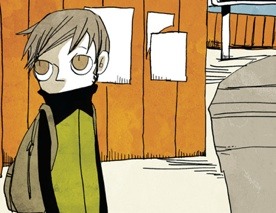
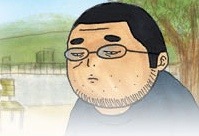
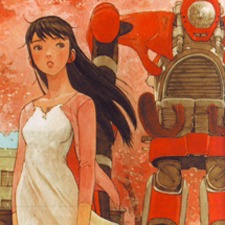
Ikki has become a great compromise overall in comics. Comedies like Wild Mountain and Buranko look like they could have come from another country or continent. The character designs for these titles are akin to indie comics seen in the US and Central Europe. As a matter of fact, Wisut Ponnimit, Buranko’s creator, is a Thai native who has worked in Japan for a number of years, further illustrating how Ikki is not opposed to new perspectives on comic creation. Action titles DoroHedoro and Freesia if in color could be sold next to the titles of Vertigo or Image. Ono Natsume’s Saraiya Goyo pushes the boundaries of how a samurai “manga” should look and how it should be told.
Egami has never been conventional. The man’s love for trains and comedy are all over Ikki, as a number of titles have featured both themes. However, his ability to recognize creative expression and the difficulties that artists must endure to achieve what they feel is success is what makes him a maverick. And now he wants to take the next step to share these comics with the world. Is the comics world ready for his Ikki? Definitely! According to insiders a golden age of graphic novels is upon us. Egami’s challenge will be making readers and buyers worldwide re-evaluate what Japanese comics/manga are.